Türkiye Bursları 2027: Stipends, Deadlines and How Selection Really Works
Türkiye Bursları 2027: stipends, CGPA and age limits, and how the five selection stages really work.
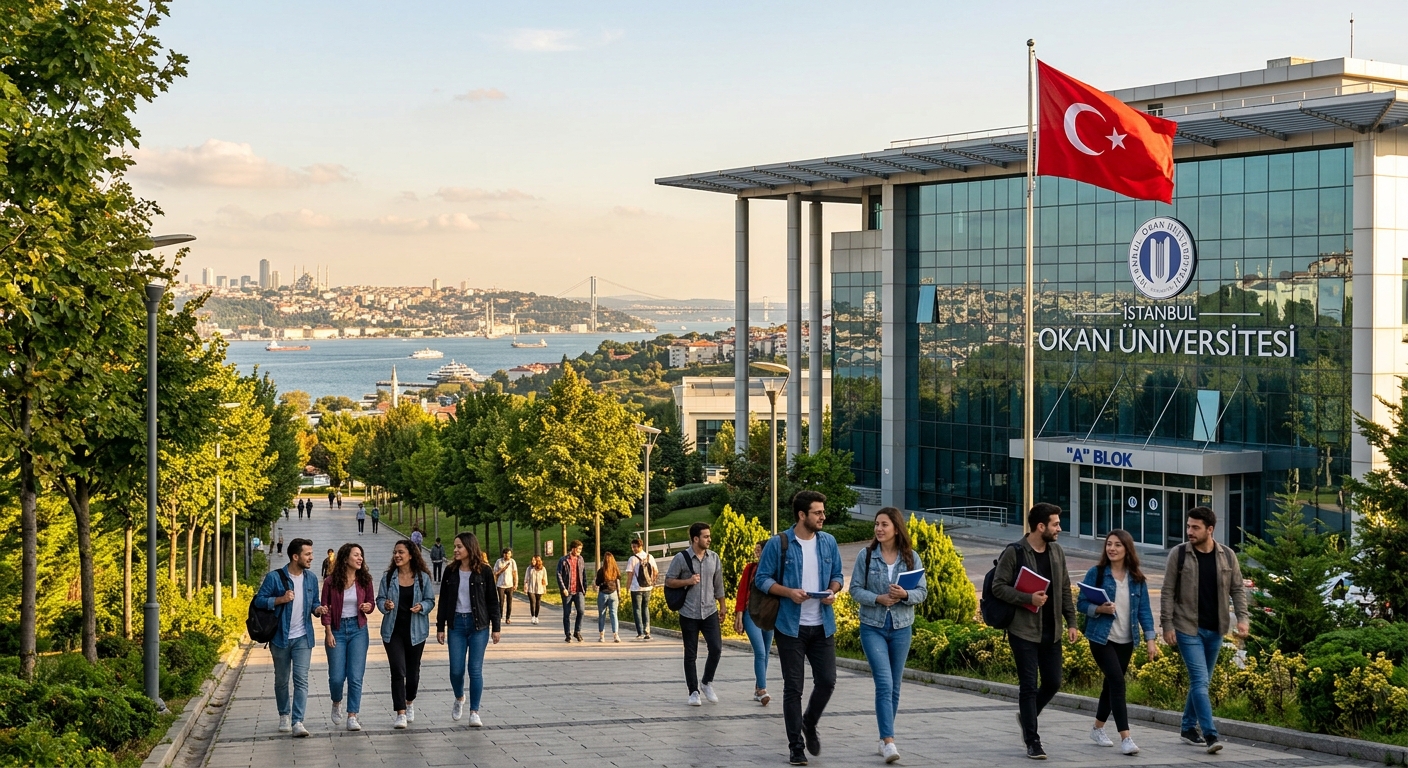
Türkiye Bursları is one of the few government scholarships that bundles everything into one application: a university place, tuition, accommodation, health insurance, flights, a year of Turkish language training, and a monthly stipend. The application window for 2027 runs, as it does every year, from 10 January to 20 February 2027 through the official TBBS portal — and it is free, with no agents involved at any stage. What follows is what the official criteria actually say, and where applicants misread them.
The money, level by level
Stipends are set by the Presidency and updated periodically; the current published rates are 6,500 TL per month for undergraduates, 9,500 TL for master’s students and 13,000 TL for doctoral candidates. On top of the stipend come the covered extras that make the package genuinely full: tuition at the placed university, state accommodation, Turkish language course, health insurance, and one-off flights both at the start of study and at graduation. A separate Merit Scholarship Programme pays double the standard stipend to applicants with outstanding grades and strong international exam scores.
| Level | Monthly stipend | Minimum CGPA | Age limit |
|---|---|---|---|
| Bachelor’s | 6,500 TL | 70% | Under 21 |
| Master’s | 9,500 TL | 75% | Under 30 |
| PhD | 13,000 TL | 75% | Under 35 |
| Research scholarship | Varies | — | Under 50 |
Two eligibility walls are worth stating plainly. Health-science fields — medicine, dentistry, pharmacy — require 90 per cent CGPA and are excluded from the scholarship’s degree placement entirely. And the age ceilings are hard: over-21s cannot apply for bachelor’s, over-30s for master’s, over-35s for PhD.
What the application asks for
You rank up to 12 university and programme preferences in the TBBS system, and placement follows your ranking against available seats — candidates only choose from universities and departments offered to them, which is why preference strategy matters more than preference count. Documents are uploaded at application: identity document or passport, a proper portrait photo, transcripts and diplomas (or a temporary graduation certificate if you finish before August), national exam scores where applicable, and for PhD applicants a research proposal plus a writing sample. Language certificates and GRE/GMAT scores go in only if your target programme requires them — IELTS is not required at the application stage, though English-taught placements may ask for proof at the university stage later.
How selection actually runs
- Preliminary assessment — automatic screening against CGPA, age and document completeness. Incomplete transcripts and unclear photos are quietly fatal here.
- Expert evaluation — a committee scores your academic record, statement of purpose, references and social engagement. The SOP carries unusual weight: candidates are warned that a weak letter of intent sinks otherwise strong files.
- Subject test (some candidates) — mainly competitive undergraduate fields: maths, geometry and logic questions.
- Interview — held in your country or online; academic fit and motivation, conducted largely in English or Turkish.
- Placement and results — final answers roll out from early summer, followed by the year-long Turkish course (Ankara, or exemption with proof) before degree study begins.
The document checklist
TBBS rejects files at source for fixable document issues, so assemble this list in December, before the portal even opens:
- Identity document or passport — valid well past the placement date.
- A proper portrait photo — the official guidance warns bluntly that unclear or unidentifiable photos undermine the evaluation.
- Academic transcript showing every course and grade — online screenshots and uncertified extracts damage the file; certified transcripts do not.
- Diploma or temporary graduation certificate — final-year students may apply with proof they graduate before August.
- National exam scores — required only for candidates without an international qualification.
- GRE, GMAT or language scores — only where your chosen programme demands them.
- Research proposal plus a writing sample — PhD applicants only, and the proposal quality weighs heavily at expert review.
Strategy notes for 2027
- Apply in the first fortnight. The portal stays open five weeks, but expert review begins on a rolling basis and document queries eat your buffer.
- Match preferences to your transcript. Candidates are placed only within departments their background qualifies them for — 12 mismatched preferences behave like zero.
- Write the SOP for the committee, not the university. Career plan, why Türkiye, why this field — in that order, concretely.
- Pair it with parallel applications. Türkiye Bursları results land months after European January deadlines; a simultaneous Erasmus Mundus or DAAD EPOS application costs nothing extra. Our EMJM calendar and 12-month timeline slot the two together.
The scholarship’s single biggest misconception is that Turkish fluency is required — it is not, at application or afterwards; the language year exists precisely for that gap. The live cards below sit in our database with verified dates and official links.
Frequently Asked Questions
What does Türkiye Bursları actually pay each month?
At 2026-2027 rates, Türkiye Bursları pays TL 6,500 per month at associate and bachelor's level, TL 9,500 at Master's and TL 13,000 at doctoral level, deposited monthly into a Turkish bank account. Merit Scholarship winners receive double the standard rate. On top of the stipend, the award covers tuition, dormitory accommodation, health insurance, a one-year Turkish language course and a one-time flight ticket.
When does Türkiye Bursları 2027 open and close?
Applications for the 2027 intake run on a single global window, historically opening in January and closing in late February, with results announced in stages between May and August. There are no application fees, and candidates list up to twelve university-programme preferences in one application.
What does the Türkiye Bursları selection involve?
Selection combines academic record (transcripts and previous grades), the application essay and preference coherence, followed by an interview for shortlisted candidates — conducted in your country or online. Interviews assess motivation, field knowledge and Turkish-language aptitude (not required in advance). Doctoral candidates should prepare a concise research summary; acceptance rates hover around 1-2% overall.
Official sources and further reading
Similar opportunities

University of Oxford
Up to 5 fully funded scholarships for the Oxford 1+1 MBA programme covering Master's degree plus MBA with full tuition and living costs.

Mohamed bin Zayed University of Artificial Intelligence (MBZUAI)
Fully funded scholarship at MBZUAI Abu Dhabi. Automatic full scholarship for all admitted graduate students (M.Sc./Ph.D.): 100% tuition waiver, monthly stipend, accommodation, health insurance. Deadline: 15 Dec 2026.

Government of Japan
The Japanese Government MEXT Scholarship is fully funded for Master's and Doctoral programs via university recommendation.