Choosing a Humanoid Robotics PhD Topic: Match the Problem to Your Skills
Humanoid robotics PhD topics grounded in real numbers: 542k industrial robots, 7k humanoids sold in 2025, the $38B forecast and what to research.
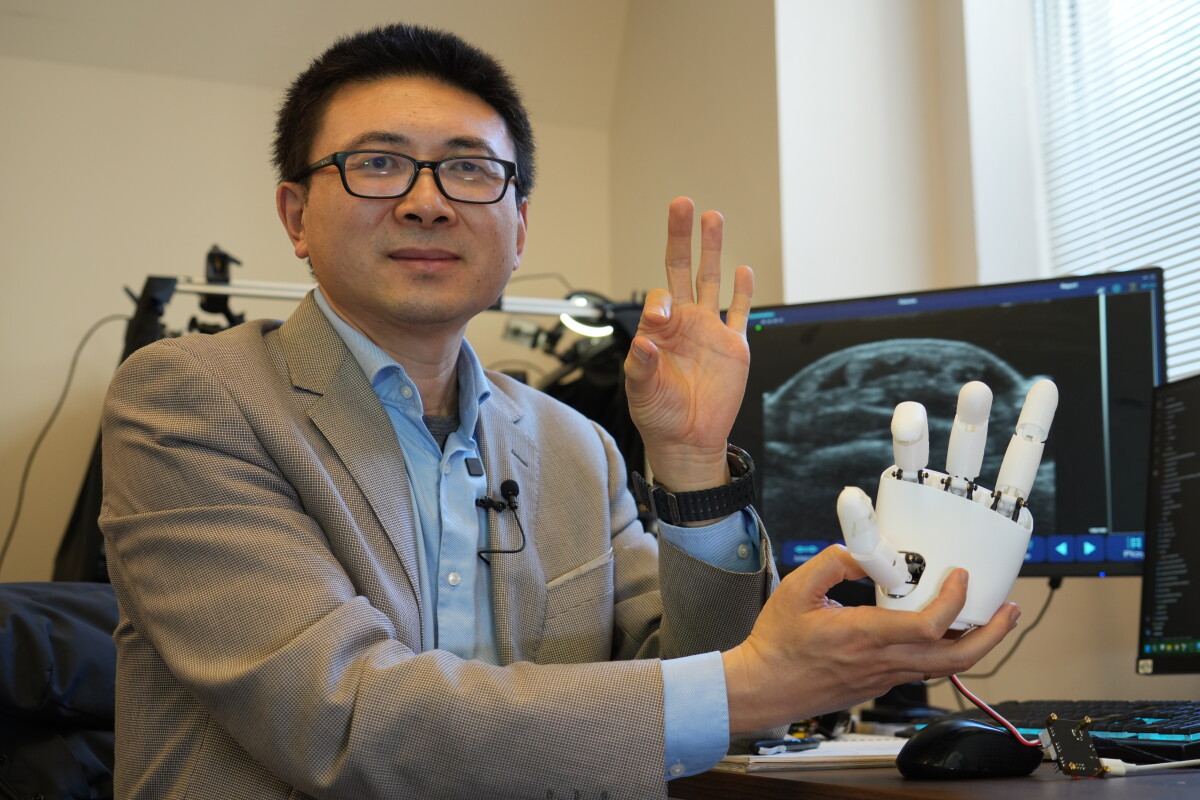
Locomotion, manipulation and perception lead to different PhD problems. Choose a topic by examining the methods you can already use, the question you want to investigate and the research group that can support it.
The market numbers that justify a PhD in humanoids
The industrial base is enormous and the humanoid layer is brand new, which is precisely the PhD opportunity. Industrial robot installations reached 542,000 units in 2024 — the second-highest year on record — with an operational stock of 4.66 million machines, and China alone installed 295,000 (54 per cent of the world total). On the 2025 figures, the United States passed Japan for the first time with 38,400 installations, the EU installed 60,500, and Germany — Europe's largest market — took 24,842. The IFR forecasts global installations rising to 655,000 in 2026 and 806,000 by 2029.
Humanoids specifically are a nascent market with venture-scale growth: roughly 7,000 full-size humanoids were sold worldwide in 2025 by IFR's count, Morgan Stanley estimates about 16,000 deployed with over 80 per cent in China, and the ecosystem counts 174 manufacturers, more than half Chinese. Forecasts range widely — Goldman Sachs sees a $38 billion total addressable market by 2035 with 890,000 units by 2030, while Morgan Stanley's scenario work reaches $5 trillion by 2050 — and the disagreement itself tells you the research frontier is real: nobody yet knows which control, learning or safety problems will matter first, which is what a PhD is for.
View as table
| Label | Value (units (thousand)) | $B TAM |
|---|---|---|
| 2025 sold | 7 units (thousand) | $2.7B TAM |
| 2030 (GS) | 890 units (thousand) | $15B TAM |
| 2035 (GS units) | 6,500 units (thousand) | $38B TAM |
View as table
| Segment | Value (companies) |
|---|---|
| China (majority) | 90 companies |
| Rest of world | 84 companies |
Locomotion and balance asks how a robot can walk, recover from disturbances and adapt to uneven ground. It draws on dynamics, control, optimization and learning. Manipulation asks how a robot can grasp and use objects while coordinating its arms and body. Perception covers the information a robot needs from cameras and other sensors to act in a changing environment. Hardware and actuation deals with the motors, transmissions, sensors and mechanical design that make physical behavior possible.
These areas overlap. For example, carrying an object while walking combines balance, whole-body control and manipulation. ETH Zurich's Robotic Systems Lab describes work across actuation, locomotion, manipulation and perception. Its legged locomotion research also shows how control, perception and learning meet in humanoid research.
Match the topic to your evidence
Read several recent papers from a lab and write down the exact questions they address. Then compare those questions with projects you can explain in detail. A simulation of a walking controller, an arm manipulation project or a sensor integration exercise can all be relevant. The value lies in explaining your decisions, experiments and limitations; a project does not need a humanoid platform to demonstrate useful preparation.
Make a short table for yourself: research question, methods the lab uses, your relevant experience and the skills you need to learn. If the final column is much longer than the others, the topic may still be suitable, but your application should explain how you plan to bridge that gap.
Turning the market map into a shortlist
Convert the numbers into a five-topic shortlist with one filter question each. Whole-body loco-manipulation: does the target lab own the hardware it would take? Contact-rich manipulation: is there a benchmark suite the group already publishes on? Sim-to-real transfer: does the group train at a scale you could contribute to? Human-robot interaction safety: does the group have the certification-adjacent partners that make safety work real? Data and foundation models for robotics: does the group participate in any of the open dataset efforts? A topic clears the screen only when the lab, the hardware and the publication record all say yes — the field is full of interesting problems nobody can fund a robot for.
Geography sharpens the shortlist further. With more than half of the world's 174 humanoid manufacturers in China and the leading shippers there too, applied-data topics concentrate in East Asian industrial labs; US labs lead capital and foundation-model work; European groups — including Germany's Fraunhofer and Max Planck institutes and the Dutch and Swiss technical universities — dominate safety, control theory and standards-adjacent research. Matching the topic to the region's comparative advantage is the difference between a PhD that reads as fashionable and one that reads as placed.
Turn an interest into an application angleInstead of writing “I am passionate about humanoid robotics,” try a narrower statement: “My controller project raised questions about balance during arm movement, so I want to study how whole-body control handles manipulation while walking.” That statement gives a supervisor something concrete to discuss. It also makes it easier to identify labs whose actual work matches your interests.
Before applying, check the position's eligibility, funding and application process on the university's own page. An interesting lab does not necessarily have an open funded position at the time you apply.
Use a topic shortlist you can explain
Make a three-column shortlist: the research question, evidence that you can start, and the resources you would need. For locomotion, relevant evidence might be a control or reinforcement-learning project. For manipulation, it could be perception, planning or contact modelling. These are examples, not prerequisites for every laboratory. Read recent work from each shortlisted group and identify the actual next question you want to investigate. A topic becomes more credible when you can explain both its appeal and the practical limits of studying it.
Use research directions as questions to investigate
The directions below are starting points, not verified research gaps. Each needs a literature review, a suitable supervisor and a feasible evaluation. Choose a topic because you can explain the underlying problem and obtain the necessary resources, not because the title contains the newest model name.
| Direction | Possible question | Evidence you could collect |
|---|---|---|
| Payload-aware locomotion | How does mass variation affect a chosen walking controller? | Completion, tracking error and stability events. |
| Contact uncertainty | How sensitive is a policy to friction-model changes? | Performance across documented contact conditions. |
| State estimation | How does delayed sensing affect a defined task? | Estimation error and downstream control performance. |
| Whole-body manipulation | Can a task-specific coordination change improve a constrained action? | Success, contact forces and motion quality. |
| Motion tracking | Where does tracking degrade as reference speed changes? | Joint, pose and timing errors. |
| Efficient control | What performance remains under a smaller computation budget? | Latency, resource use and task outcomes. |
You can also investigate recovery from disturbances, controller transfer between models, data quality in imitation learning, perception under occlusion, human-directed task interfaces or reproducible benchmarking. Narrow each direction to a measurable condition. A title such as robust humanoid intelligence is too broad to establish what an experiment would test.
Match the question to your present strengths
If your strongest background is control, begin with a task where dynamics, estimation or optimisation matters. If it is perception, define how the information affects a robot's decision rather than promising a complete control stack. If it is mechanical design, identify the physical variable and the evaluation that distinguishes the design from alternatives.
A topic can include methods you need to learn, but the preparation plan should be credible. Show one completed project that establishes a starting point and identify the next training step. Avoid claiming experience in reinforcement learning because you ran an unfamiliar repository once without understanding its experiment.
Check the lab before developing a full proposal
Read recent original papers, the group's current research and any advertised project. ETH Zurich's Robotic Systems Lab, for example, describes work connecting locomotion, robot design, perception and learning. That provides context for possible directions; it does not establish that the lab is recruiting for your proposed topic or has agreed to supervise it.
How do I show that a topic is novel?
Review relevant literature and make a precise comparison with existing work. If the evidence is incomplete, describe a candidate question instead of claiming an established gap.
Do I need access to a humanoid before applying?
Requirements depend on the project. Simulation, controls or other robotics work can demonstrate relevant preparation, provided you describe its scope and limitations accurately.
Choose a question with an interpretable stopping point
Before committing, describe the smallest experiment that would produce useful evidence. Name a result that would make you revise the idea. A topic becomes easier to scope when you know what could challenge the hypothesis as well as what might support it.
Questions applicants often ask
Is humanoid robotics a good PhD field in 2026?
The demand signals are strong: 542,000 industrial robots installed in 2024, ~7,000 full-size humanoids sold in 2025, 174 manufacturers (more than half in China) and Goldman Sachs projecting a $38B market by 2035. The unsolved problems — whole-body control, contact-rich manipulation, safety — are exactly thesis-sized.
Which research topics in humanoids are most fundable?
Topics tied to deployment blockers: locomotion over unstructured terrain, contact-rich manipulation, sim-to-real transfer, safe human-robot interaction and whole-body teleoperation. Funders follow the market's blockers, and the IFR names safety, reliability and training data as the field's gaps.
Official sources and further readingRequirements and policies should be checked for your programme and application date.
- ETH Zurich RSL: legged locomotion research
- MuJoCo: simulator overview
- RSS: Expressive Whole-Body Control for Humanoid Robots
Related guides
Official sources and further reading
Similar opportunities

North Carolina State University
The HIER Lab at NC State University offers fully funded PhD positions in whole-body control, humanoid robotics, and manipulation. Led by Prof. Jaemin Lee. Priority deadline: 15 Dec 2026.

Karlsruhe Institute of Technology
The H2T Lab at Karlsruhe Institute of Technology (KIT) offers a doctoral researcher position in human-robot interaction and dexterous manipulation. Salary TV-L E13 (100%). Open until filled.

University of Agder
3-year fully funded PhD in learning-based control of autonomous robot manipulation at University of Agder, Norway. NOK 550,800 gross/year. Deadline: 28 Oct 2026.