Study in France: Low Tuition, the Campus France Procedure and the 2026 Fee Change
France: real tuition levels, the Campus France procedure and the 2026 fee-exemption change.
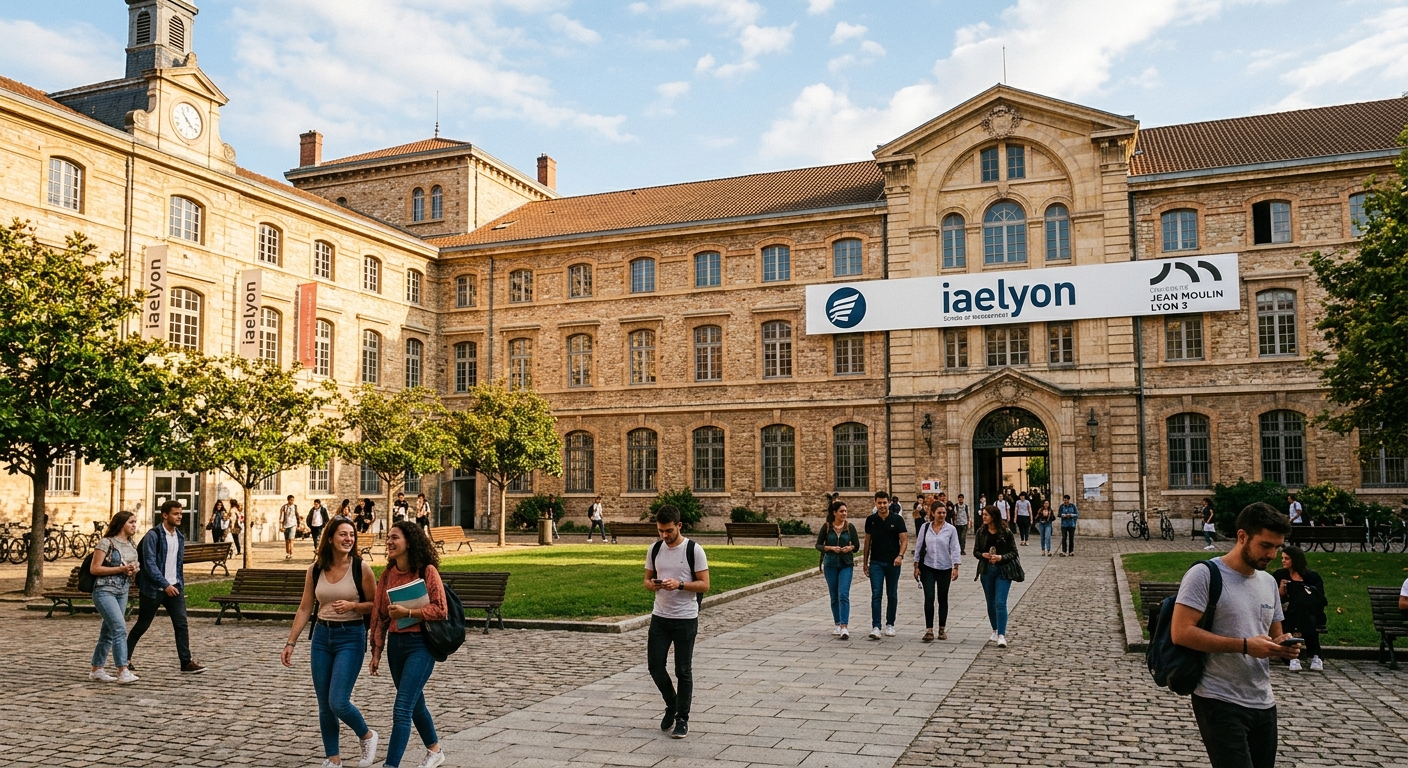
France remains continental Europe’s best-kept tuition secret — public universities charge European-level fees, doctoral registration costs a few hundred euros a year, and the state subsidises the rest. But the system has two quirks that decide outcomes: a differentiated fee regime for non-EU students whose exemptions are being tightened from 2026, and a mandatory Campus France procedure that starts months before any application deadline. Handle both and France is extraordinary value; ignore them and the costs surprise you.
What tuition really looks like
EU students pay national rates of roughly €175 at bachelor’s and €250 at master’s level. Non-EU students on degree programmes face differentiated fees of around €3,000 a year at bachelor’s and just under €4,000 at master’s — a fraction of UK or US equivalents, but a real number since 2019. The change that matters for 2027: a decree effective from the September 2026 intake restricts how freely universities can exempt non-EU students from those differentiated fees, so a university that waived fees for your friend in 2024 may not waive them now. Doctoral registration is unaffected — PhD candidates, whether French or international, pay the standard few-hundred-euro rate, and most doctoral places are funded anyway.
| France: what you pay by status | Detail |
|---|---|
| EU students | National rates: ~€175 (bachelor’s), ~€250 (master’s) |
| Non-EU students | Differentiated fees: ~€3,000 (bachelor’s), just under €4,000 (master’s) since 2019 |
| Doctoral registration | A few hundred euros for everyone; most doctoral places are funded |
| Exemptions | A 2026 decree restricts university fee waivers - get your fee status in writing |
| Campus France procedure | Mandatory for non-EU applicants on the Études en France list; ~€100+ processing fee; windows close November-February |
| Eiffel scholarship | €1,200/month (master’s), €2,100 (doctoral) from January 2026; institution-nominated only |
The practical rule for applicants: get your fee status in writing from the institution’s international office before accepting an offer, and treat written exemptions as gold.
The Campus France procedure
Non-EU applicants (from countries on the Études en France list) do not apply to universities directly — they pass through Campus France: an online file on the Études en France portal, document verification, an interview at the Campus France space or embassy in your country, and then your choices reach the French institutions. The procedure costs a processing fee (typically €100-plus), runs on fixed national calendars (most windows close November-February for September intake), and produces the acceptance record your visa needs. Skipping it is impossible; starting it late is the single most common reason qualified applicants miss the French cycle entirely.
Scholarships that change the arithmetic
- France Excellence Eiffel — €1,200 a month at master’s level (€2,100 doctoral from January 2026), institution-nominated; our Eiffel guide covers the nomination game.
- Région and city scholarships — Île-de-France and others fund international master’s students directly.
- Cotutelle and double degrees — French laboratories love shared supervision, which comes with funding attached.
- France-hosted Erasmus Mundus programmes — dozens of them, paying €1,400 a month; the deadline calendar lists them.
Language: less of a wall than you think
France now runs well over a thousand English-taught programmes, concentrated in engineering schools, business schools and master’s-level science. French proficiency still widens your options — particularly at bachelor’s level and in the provinces — and B1-B2 French strengthens scholarship files. For doctoral candidates, laboratories function in English as easily as anywhere in Europe; daily life is smoother with functional French, and free municipal courses exist in most university cities.
Universities and the grandes écoles
French higher education runs on two parallel tracks, and applicants conflate them at their peril. The public universities — Sorbonne, Lyon, Toulouse, Aix-Marseille and dozens more — charge the national fees described above and host most doctoral research. The grandes écoles — Polytechnique, HEC, the Sciences Po network, the engineering schools — charge their own (higher) fees, select through their own cycles, and dominate specific career pipelines: engineering, business, public administration. Neither is simply better; a master’s at a grande école buys brand density in French industry, while university research master’s feed doctoral schools more directly. For PhD-bound applicants, the university route with a research-heavy master’s (M2 recherche or an integrated five-year track) remains the standard on-ramp — and the one the Eiffel scholarship most often funds.
Work rights for students are generous by European standards: up to 964 hours a year — about 60 per cent of full time — with the minimum wage making part-year work genuinely contributory to a budget. Alternance contracts (study-plus-employment) exist even at master’s level and pay salaries while counting towards residency.
The timeline
Études en France files open around October-November; institutional deadlines land December-February; Eiffel nominations close at Campus France on 8 January; results arrive March-May; visas follow in June-July for a September start. Work the calendar backwards — our 12-month timeline shows how France slots alongside British and Dutch applications without doubling the workload. The live France listings below — PSL fellowships, France-hosted Erasmus Mundus programmes and the Eiffel card — are funded places you can start on today.
Frequently Asked Questions
How much does a public university in France cost?
French public universities charge differentiated registration fees: €175 per year for Licence and €250 for Master's (2026-2027 rates) for EU students, while non-EU students pay €2,850 per year for Licence and €3,879 for Master's unless the university applies the partial waiver. Doctoral registration is €391 per year for everyone. These remain Europe's lowest relative to living costs.
Is Campus France mandatory for non-EU students?
Yes — every non-EU/EEA applicant goes through the Campus France 'études en France' platform: account creation, document upload, an interview at your local Campus France office and then the visa application. Some countries run it online only. Start 6-9 months before the intake; the procedure unlocks the consular student visa (VLS-TS) process.
What scholarships cover French living costs?
The main options are the Eiffel Excellence Scholarship (€1,181-1,700 per month, institution-nominated), the French government bourses via embassies, regional CROUS grants and the housing-help CAF subsidy available to most students regardless of nationality. Combined, a CROUS grant plus CAF can cover €600-900 per month — a decisive margin outside Paris.
Official sources and further reading
Similar opportunities

Campus France
France Excellence Eiffel Scholarship 2027: French government funding for top international students - €1,181/month at master's level, €1,700/month at PhD level, plus travel and insurance. Institutions submit by 6 January 2027.